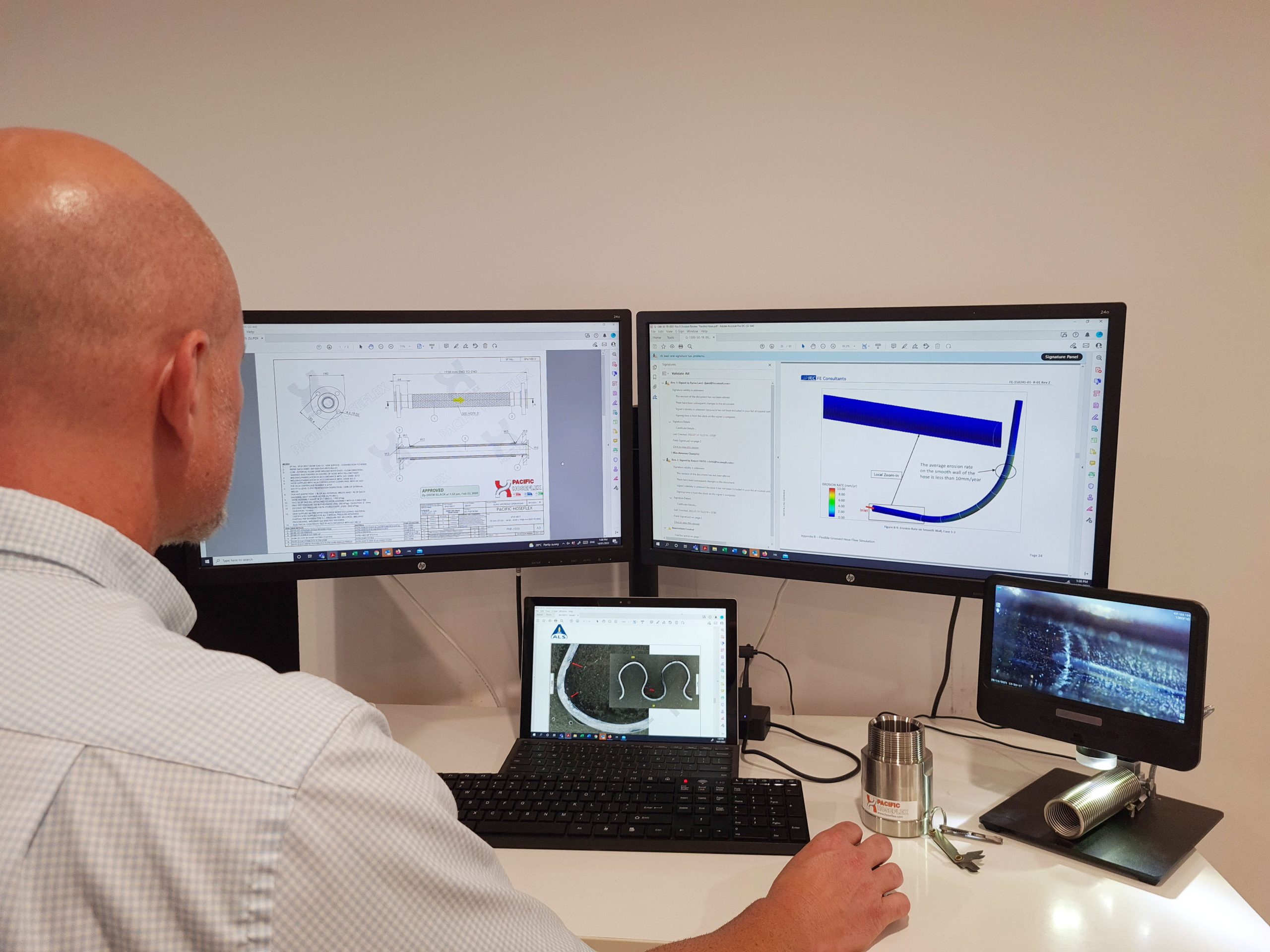
In mining operations, many people think of compliance as a checklist item, something that needs to be signed off on so production can start. In reality, isn’t it more accurately described as a living system of proof that your equipment, processes, and documentation are aligned at every stage of operation?
Compliance is an ongoing condition of safe operation. If gaps show up during an audit, they rarely stay “small” for long. In many cases, they escalate into corrective actions, equipment restrictions, or full shutdown delays.
At Pacific Hoseflex, we see this pattern repeat across sites. Often, it’s not a major design flaw that causes disruption. It’s the accumulation of small, overlooked compliance gaps, often in hose assemblies, documentation, inspection records, or maintenance traceability.
Let’s look at where those failures generally occur and why they matter so much.
Compliance gaps aren’t generally about one big mistake
When audits happen, they aren’t just looking at whether mining hoses are working efficiently. They’re verifying whether that equipment can be proven safe, suitable, and maintained within standards.
In mining, compliance failures often stem from:
- Missing or incomplete hose assembly records
- Unverified pressure ratings for specific applications
- Lack of traceability for components (hoses, fittings, couplings)
- Inconsistent inspection intervals
- Substituted components that were never re-certified
Individually, these issues may seem minor. But during an audit, they create uncertainty, and that uncertainty must be escalated. Once confidence in system integrity drops, operations may need to slow down, isolate equipment, or even stop production until the documentation and verification are corrected.
Hose systems are a common audit pressure point
During mining audits, hydraulic and industrial hose systems are one of the most frequently scrutinized areas. Why? It’s because they are flexible, high-pressure components operating in harsh environments. That combination increases both risk and variability.
With compliance, you need alignment with recognised standards (such as pressure rating suitability, assembly certification, and correct application matching), as well as evidence that components are being used exactly as specified.
When do issues occur?
- A hose is replaced with an equivalent “on hand” item without formal approval
- Fittings are changed but not re-certified as a system
- Pressure ratings are assumed rather than verified against operating conditions
- Installations are not recorded back to batch or build documentation
When documentation is the weakest link
Sometimes in modern mining operations, equipment failure isn’t always the issue, information failure is. A compliant system is one where every component can be traced: where it came from, how it was assembled, when it was installed, and how it has been maintained.
If a hose’s traceability breaks down, there are gaps. And gaps can default to risk. Common documentation issues include:
- Missing installation dates or service logs
- No linkage between the hose assembly and the equipment ID
- Outdated inspection certificates
- Paper-based records are not aligned with field reality
- Incomplete change-out history after maintenance work
Even when equipment is working efficiently, missing documentation can force precautionary shutdowns until verification is completed. This is why many sites are moving toward tighter integration between maintenance systems and asset tracking, especially for high-pressure fluid transfer systems.
Preventing compliance gaps before they reach the audit stage
The most effective compliance strategies in mining are proactive, not reactive. That means building verification into the lifecycle of hose and fluid systems, not just inspecting them after installation.
Practical approaches include:
- Standardising hose assemblies across site applications
- Maintaining full traceability from supply to installation
- Implementing scheduled inspection and replacement cycles
- Ensuring all substitutions go through engineering approval
- Aligning maintenance records with actual field conditions
At Pacific Hoseflex, this approach is supported through our Asset (Hose) Management System, designed specifically to maintain traceability and reduce compliance risk across the full lifecycle of hose assemblies.
Asset (Hose) Management System: Built for traceability and control
Our Asset (Hose) Management System gives mining and industrial operators complete visibility over hose assets, from manufacture through to installation, inspection, maintenance, and replacement.
It’s designed to remove the uncertainty by ensuring every hose assembly has a clear, accessible, and up-to-date record attached to it. The system is flexible and can be customised to suit site-specific requirements, whether that’s a single plant or a multi-site operation.
It’s also fully compatible across devices, including iPads, tablets, iPhones, laptops, and desktop systems, with a user-friendly interface and secure customer portal access. Existing customers can access a 24-hour online portal (view-only) using a unique login, while new customers can be set up by contacting us at sales@hoseflex.com.
What the system tracks
The Asset (Hose) Management System is built to provide full lifecycle visibility of each hose assembly. This includes:
- Certification and compliance records
- Tag and identification data
- Photos and supporting documentation
- Test results and manufacturing details
- Installation and maintenance history
- Scheduled service and replacement dates
- Current location and asset status
- Recall and inspection due dates
Because all data is stored in a secure hosted database, information remains consistent and traceable.
Reports generated from the system are designed to give operations a clear view of asset condition and compliance status at any point in time, reducing reliance on manual tracking or fragmented records.
Operators can demonstrate:
- Where each hose came from
- How it was built and certified
- When it was installed and last inspected
- Whether it meets current operating requirements
This level of traceability is what prevents small compliance gaps from turning into shutdown delays.
Compliance in mining is about information integrity. Without a structured system in place, those gaps accumulate quietly until they are exposed during review.
By embedding traceability into the lifecycle of every hose through an Asset (Hose) Management System, operators gain more than compliance support, they gain operational certainty.
For more information, contact the Pacific Hoseflex team.