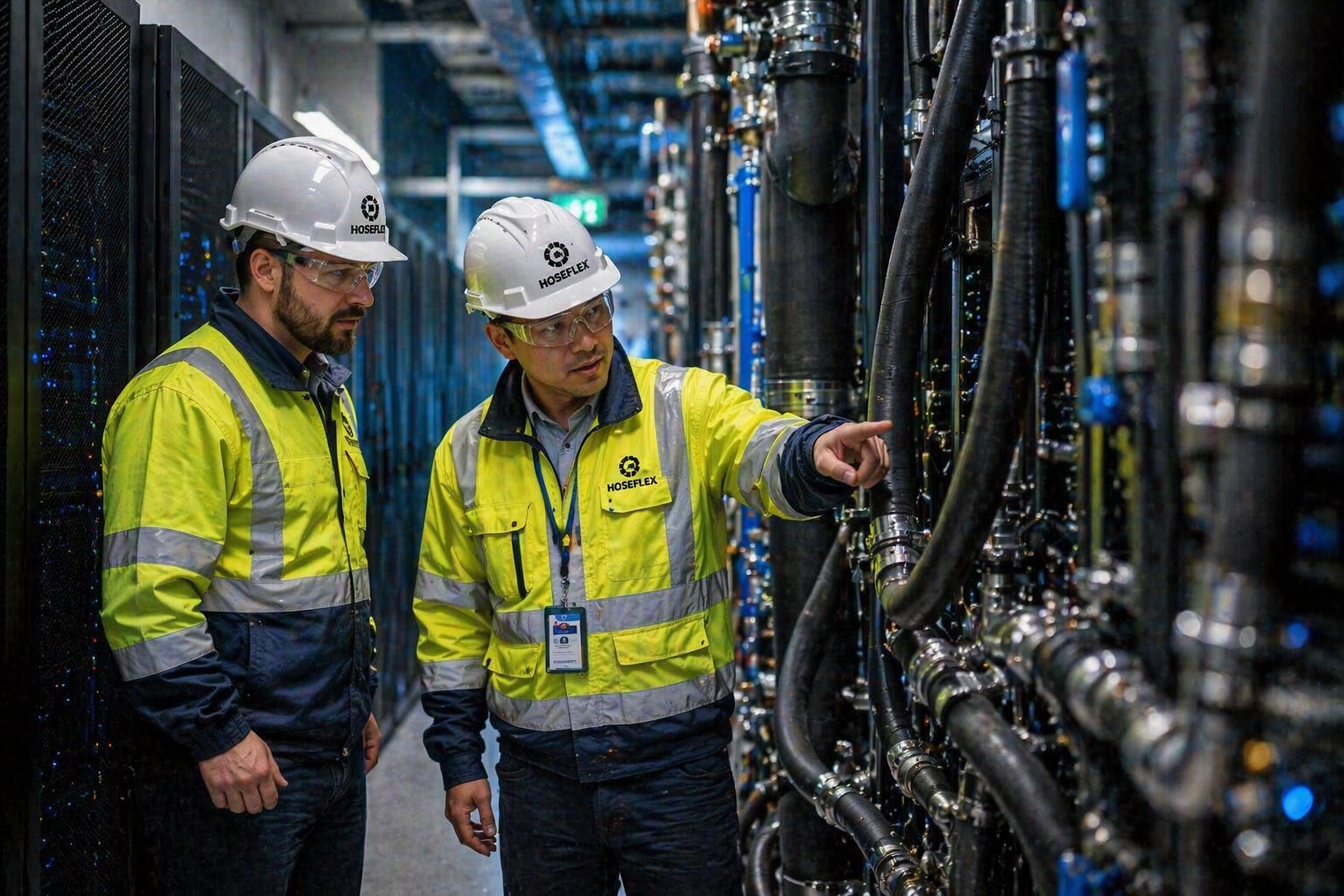
As we see AI workloads, edge computing, and hyperscale infrastructure expanding, modern data centres are operating at higher rack densities and generating more heat than ever before.
Traditional air-cooling systems are starting to be insufficient for many high-performance computing environments, forcing operators to adopt advanced liquid cooling systems and specialised hose solutions designed for continuous operation under demanding thermal and pressure conditions.
Choosing the right hose assemblies for data centres is the key to maintaining uptime, protecting sensitive equipment, and improving cooling performance. To plan or upgrade high-density facilities, understanding the thermal pressure and chemical performance requirements of data centre hoses is essential.
Why are specialised hoses needed for high-density data centres?
High-density environments can exceed 30kW to 100kW per rack, particularly in AI and GPU-intensive applications. Liquid cooling systems transfer heat far more efficiently than air, but they also introduce new engineering challenges.
Data centre hoses must operate reliably under:
- Continuous elevated temperatures
- Variable pressure loads
- Exposure to glycol-based coolants and treatment chemicals
- Tight installation spaces and vibration conditions
- Strict uptime and leak prevention requirements
If a hose assembly fails in a live data centre environment, there can be serious implications, coolant leakage, equipment damage, thermal shutdowns and costly operational interruptions. That’s why operators are turning to hose systems that are specifically designed for liquid cooling infrastructure. These systems are built to withstand thermal cycling, maintain flexibility and resist chemical degradation over extended service life.
Thermal performance requirements
The number one priority for data centre hose selection is stability. Liquid cooling systems often operate with supply temperatures that range between 20°C and 40°C, with higher localised temperatures for high-performance systems.
Materials used in hose construction must maintain integrity during constant thermal cycling. Repeated expansion and contraction can weaken inferior materials over time, leading to cracking, hardening or seal failure.
Thermal performance is extremely important in high-density data centre cooling systems. Why? Because hose materials are exposed to continuous temperature fluctuations and ongoing operational loads.
To ensure your hoses are reliable long-term, they must resist thermal fatigue caused by repeated heating and cooling, while staying stable at elevated temperatures.
Materials should also help prevent coolant loss over time while remaining flexible during constant operation. In advanced cooling systems, hoses also need to work effectively with immersion cooling and direct-to-chip cooling technologies to support reliable performance and efficient heat transfer.
EPDM and stainless steel braided hose assemblies are commonly used in data centre environments due to their ability to tolerate demanding thermal conditions while maintaining structural integrity.
Pressure performance in liquid cooling systems
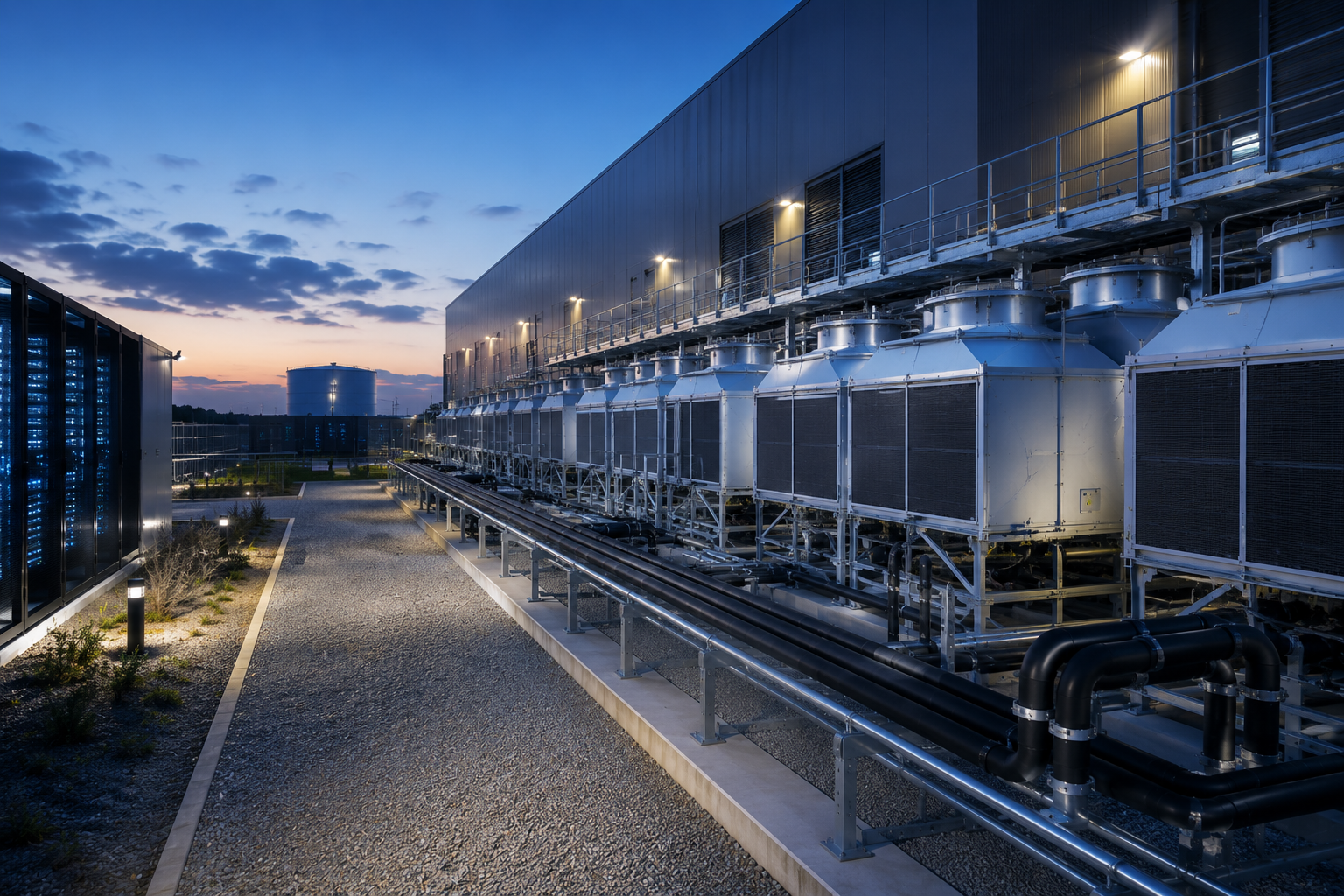
What pressure rating is required for data centre cooling hoses? This is one of the most common questions raised by operators designing high-density cooling infrastructure.
Pressure requirements can vary depending on the cooling architecture, pump configuration and facility scale. Your hose assemblies must be able to simultaneously handle operating pressure and transient pressure spikes without compromising reliability.
Pressure fluctuations can occur at various times, usually during pump startup, flow changes or emergency shutdown procedures.
Engineered hose assemblies must provide:
- Stable burst pressure margins
- Reinforcement suitable for continuous pressure cycling
- Secure end connections to minimise leak risks
- Minimal pressure drop across cooling circuits
- Long-term resistance to mechanical stress and vibration
Chemical compatibility and material selection
What materials are best for fluid transfer in data centres?
Modern cooling systems often use water-glycol mixtures, corrosion inhibitors and specialised dielectric fluids. Hose materials must be chemically compatible with these fluids to prevent swelling, contamination or internal degradation.
If chemical hoses are incompatible it can lead to particle shedding, coolant contamination and reduced thermal transfer efficiency. In severe cases, material breakdown may damage pumps, valves or sensitive electronic components.
Commonly used materials include EPDM-lined hoses and stainless steel assemblies due to their broad chemical resistance and durability.
When selecting hose materials, you must evaluate:
- Compatibility with glycol concentrations and additives
- Resistance to corrosion and oxidation
- Permeation resistance for long-term fluid retention
- Cleanliness requirements for sensitive cooling loops
- Compliance with fire safety and facility standards
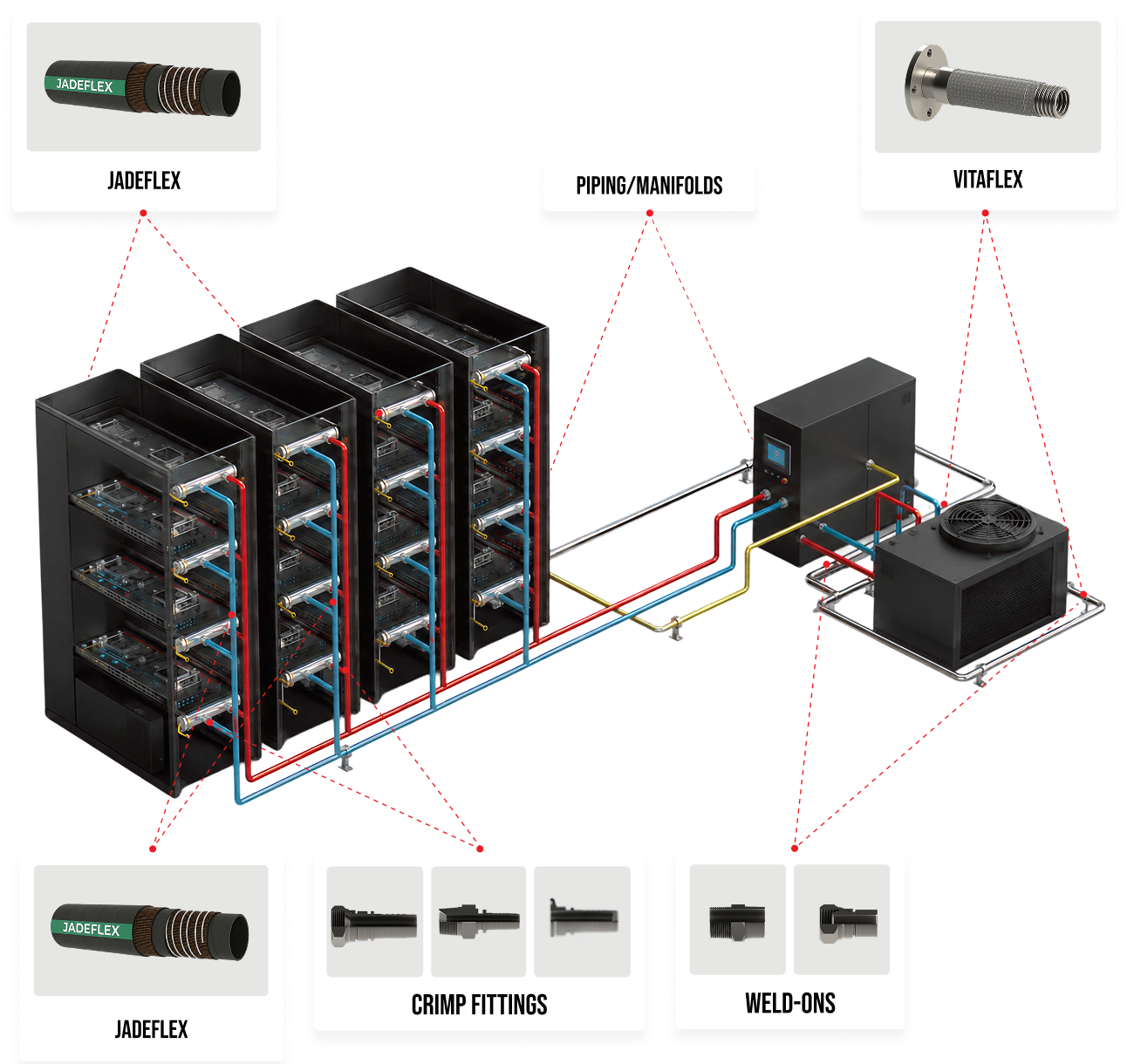
For high-density data centre environments, specialised hose solutions such as Jadeflex Liquid Cooling Hose and VITALFLEX® Annular Stainless Steel Hoses are designed to deliver reliable thermal and chemical performance. Jadeflex EPDM hoses offer excellent flexibility, fire resistance and compatibility with water and glycol cooling systems, making them ideal for IT thermal management and electronic component cooling.
For more demanding applications, VITALFLEX® stainless steel hoses provide superior durability, pressure resistance and compliance with critical industry standards for mission-critical infrastructure.
Reliability, maintenance and uptime considerations
Why is hose reliability so important in AI-ready data centres? Cooling infrastructure shouldn’t be considered secondary plant equipment; it’s now directly linked to compute performance and operational continuity.
Future-proofing data centre cooling infrastructure
Selecting hose assemblies with the right thermal stability, pressure resistance and chemical compatibility helps minimise downtime, improve cooling efficiency and protect critical equipment.
At Pacific Hoseflex, we supply engineered hose solutions designed for demanding liquid cooling applications, including Jadeflex Liquid Cooling Hoses and VITALFLEX® stainless steel assemblies for mission-critical environments.
Explore our specialised Data Centre Hose Solutions or contact the Hoseflex team to discuss the right solution for your cooling infrastructure needs.